A decade of community organizing built on a single refusal: shame will not be the system. What follows is the proof of work — the stations, the campaigns, the runways, the partnerships. Pieces of the broader Frame, told as field reports.
"Where shame becomes infrastructure becomes agency."
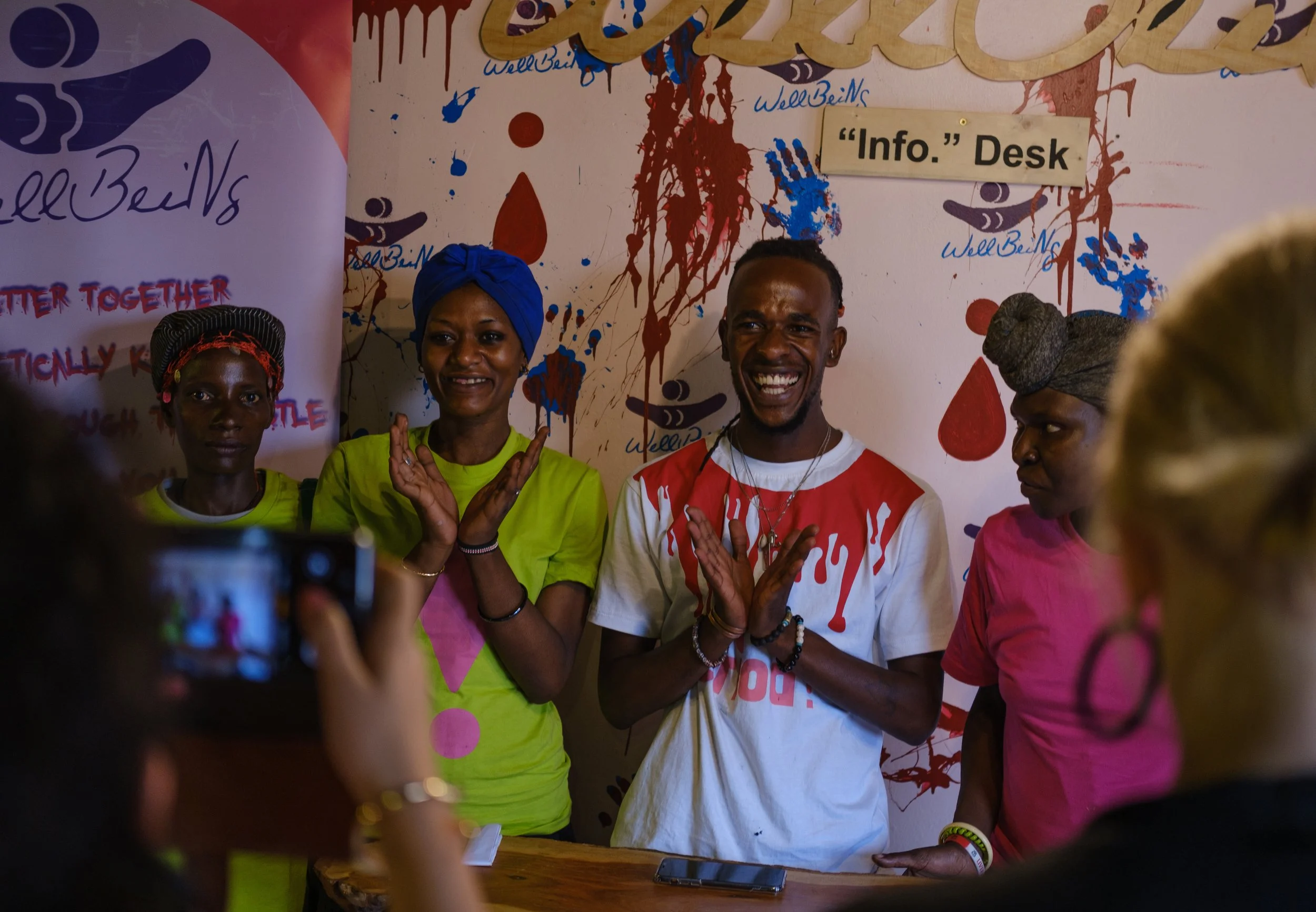
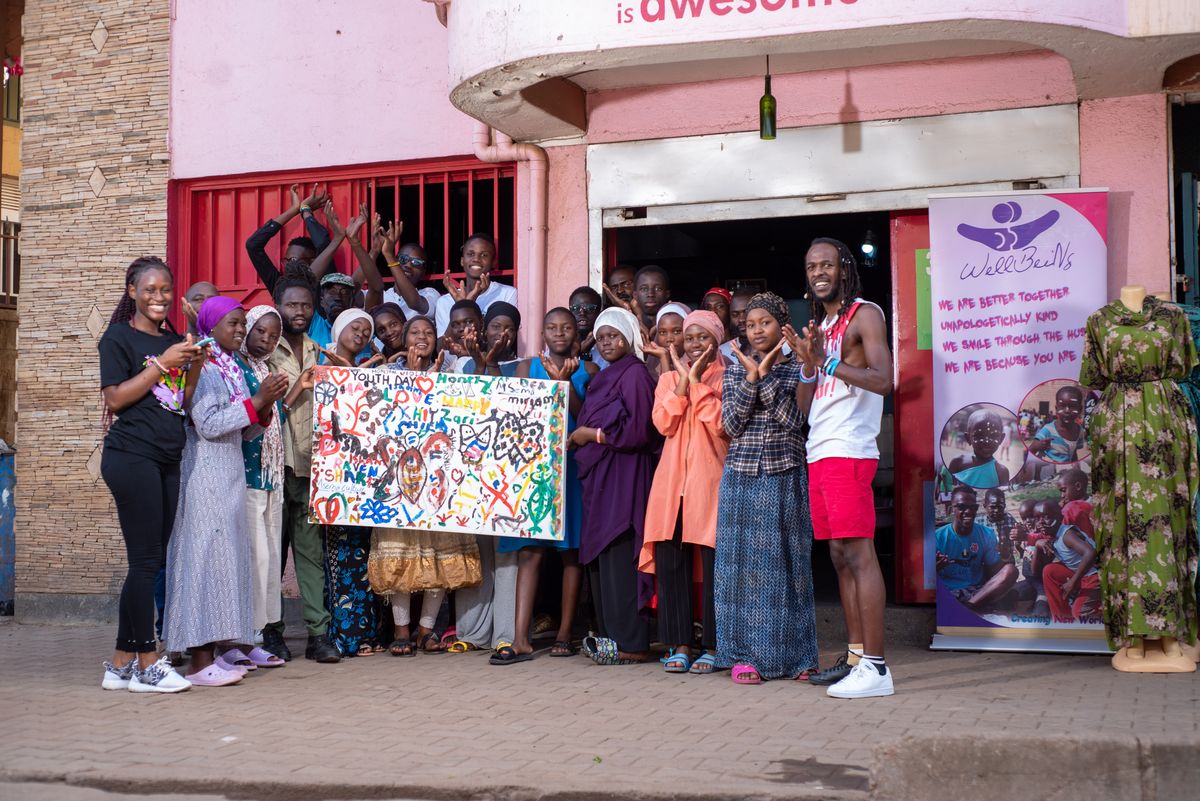
The Menstruation Station opened in January 2020 in Kisenyi III — a pink house with a sign above the door that reads "My Period Is Awesome." It is the architecture our work had been pointing toward all along: a place where dignity could live.
What started as a single sanitary-product distribution point grew, over five years, into BWEN's working prototype for the hub model: an Innovation Centre, a Network Residence, a skills-and-enterprise space. The operating anchor for The Frame — and the proof of concept for the larger National Hub still to be built.
It is where parish leaders meet. Where Community Solution Labs assemble. Where the Shebang Trashion workshop runs. Where the WUZI circular textile enterprise produces. Where visiting practitioners reside. Five years in, the Station has become proof that one well-anchored point can hold a whole network — and that dignity, properly housed, scales. The goal now is a dedicated National Hub: a bigger home for what the Station has already shown is possible.
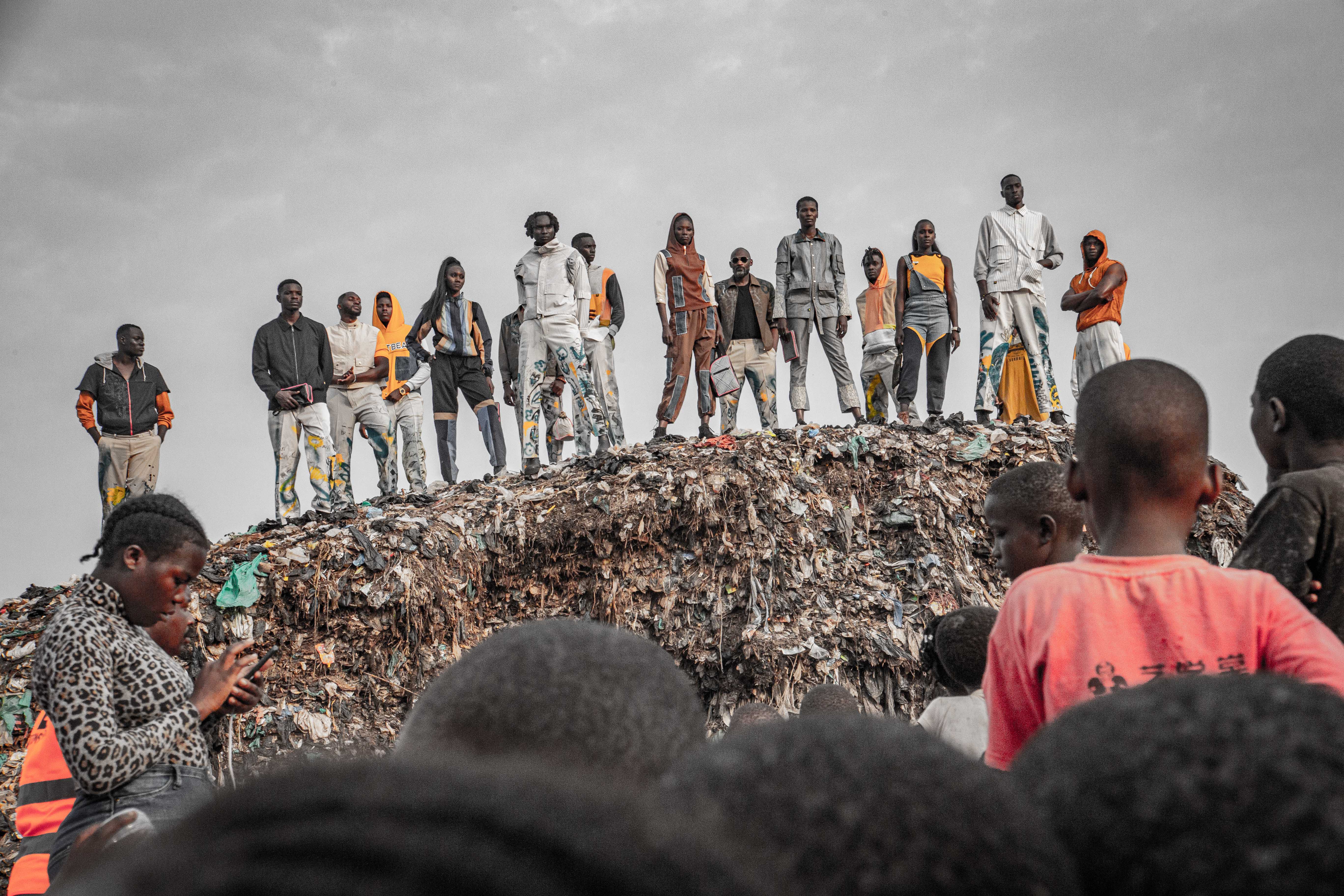
The Shebang Trashion Show is BWEN's annual public-facing storytelling event — an upcycled fashion runway that turns waste, dignity, and climate into a wearable, walkable conversation. Each edition takes a different theme: the first centred on menstrual health and the shame around menstruation; the second on sexual reproduction; the fourth (2024) brought the runway directly to the trash collection zone in Namuwongo-Kasanvu and reframed the night around fashion's contribution to climate change.
Each show has been built with designers across East Africa and the diaspora — Musema Culture, Bobbin Case (Kenya), Quill Clothing, ORM (UK-Ugandan barkcloth), Njola Impressions, and others — recycling waste into collections inspired by the host community's own stories.
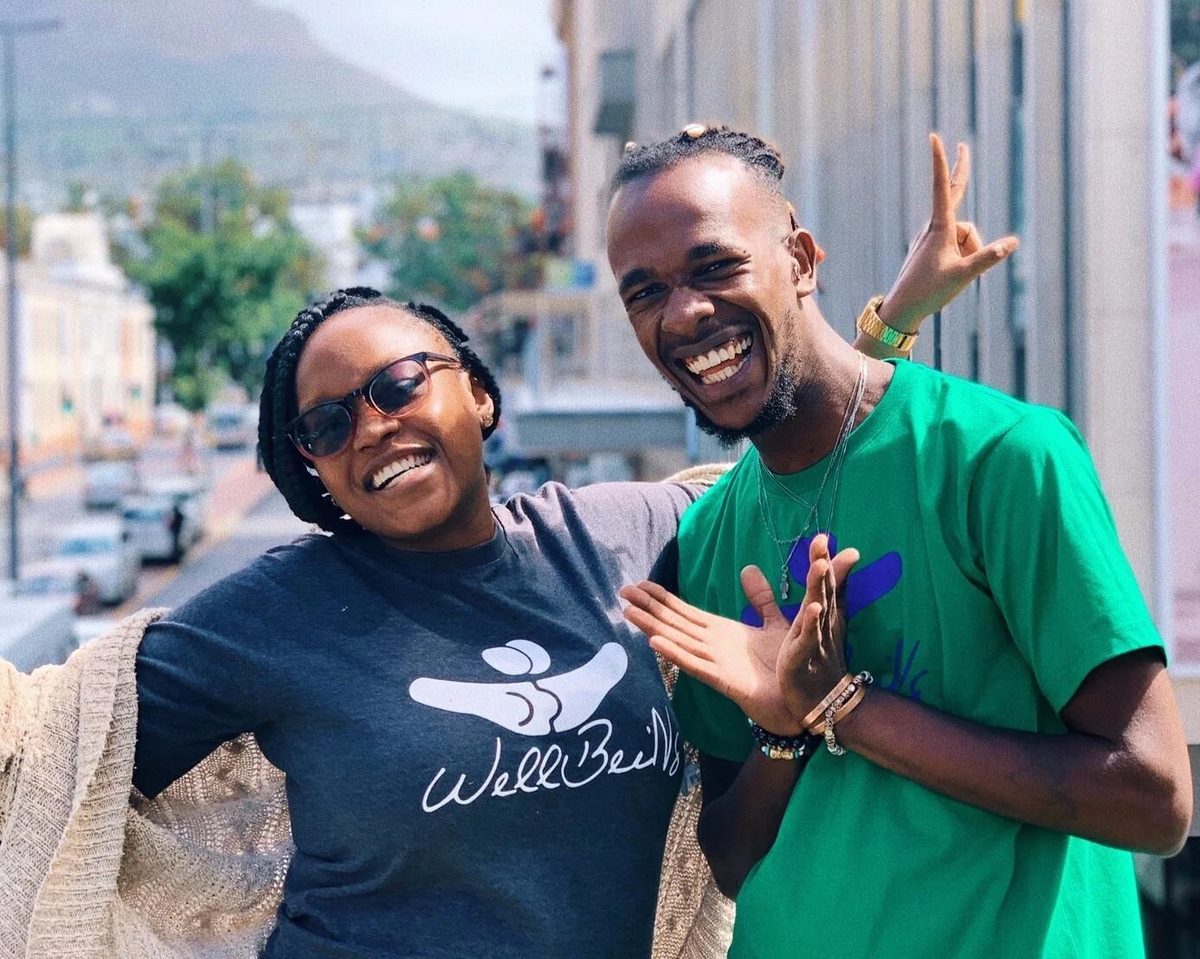
The campaign was conceived in a late-night conversation in Australia. Shyaka was on a work trip with AIME mentoring; he and his colleague Will Wensley were sketching what a global solidarity gesture for menstrual justice might look like. They landed on something deceptively simple: a hand sign anyone, anywhere could make.
A V-shape — the female reproductive system rendered visible — held close to the heart as solidarity. A photograph anyone could take. A hashtag anyone could carry: #NoPeriodShame.
The campaign launched on May 1, 2020 during Menstrual Hygiene Month, anchored within the Swedish Institute's Creative Force project. The participation was simple: take the photo, post it, tag #noperiodshame and @myperiodisawesome. The aim wasn't reach for its own sake — it was permission. Permission to speak, to organise, to redesign norms in public.
By the end of the month, the campaign had reached over 650,000 people online, gathered participants in 17 countries, and been amplified by Swedish Embassies in five African countries — alongside influencers, NGOs, civilians, and partner organisations across five continents. What mattered was what the reach unlocked: a cultural opening that the Menstruation Station, Shebang, and the wider Frame could pour through.
Three long-form reports tracing the years before and after the Menstruation Station — the partnerships that shaped us, the conversations that broke open, and the city that taught us what was possible.
"In a public-health classroom in Kampala, a question refused to stay academic."
BWEN began as a question its founders couldn't unhear: why was menstrual health written about in textbooks but unspeakable in households — and what would it take to change that? Shyaka Farid Lwanyaaga and a circle of public-health students at Cavendish University started organising in the city's most densely-lived neighbourhoods, taking the conversation into the open air of community spaces because it had been kept indoors too long.
We called ourselves the Wellbeing Foundation then. The premise was simple and uncompromising: when a young person from a marginalised community rises, they don't just rise on their own — they widen the door behind them. They become a translator, a witness, an organiser. They make the next rising possible.
"When a young person from a marginalised community rises, they don't just rise on their own — they widen the door behind them."
A capacity-building partnership with the Swedish organisation Wise Economy Global Association — funded by FORUM SYD — gave the work a structural backbone: governance, project management, advocacy methodology, training. With that, what had been a campus initiative became an organisational practice. We built a volunteer model, formalised partnerships, expanded media reach, and grew our literacy across SRHR, menstrual health management, human rights, and governance.
The rebrand to BWEN — the Buntu Wellbeing Experience Network — kept the philosophy and added the architecture to scale it. The story of every Lab, every campaign, and every show that followed begins here.
"We turned the conversations no one wanted to have into the events no one could ignore."
In 2019, with funding from the Swedish Institute and our long-standing partner Wise Economy Global Association, BWEN began a two-year Creative Force project. The thesis was direct: shame is enforced through silence, and silence breaks under cultural noise. So we set out to make noise — but the kind that builds trust rather than spectacle.
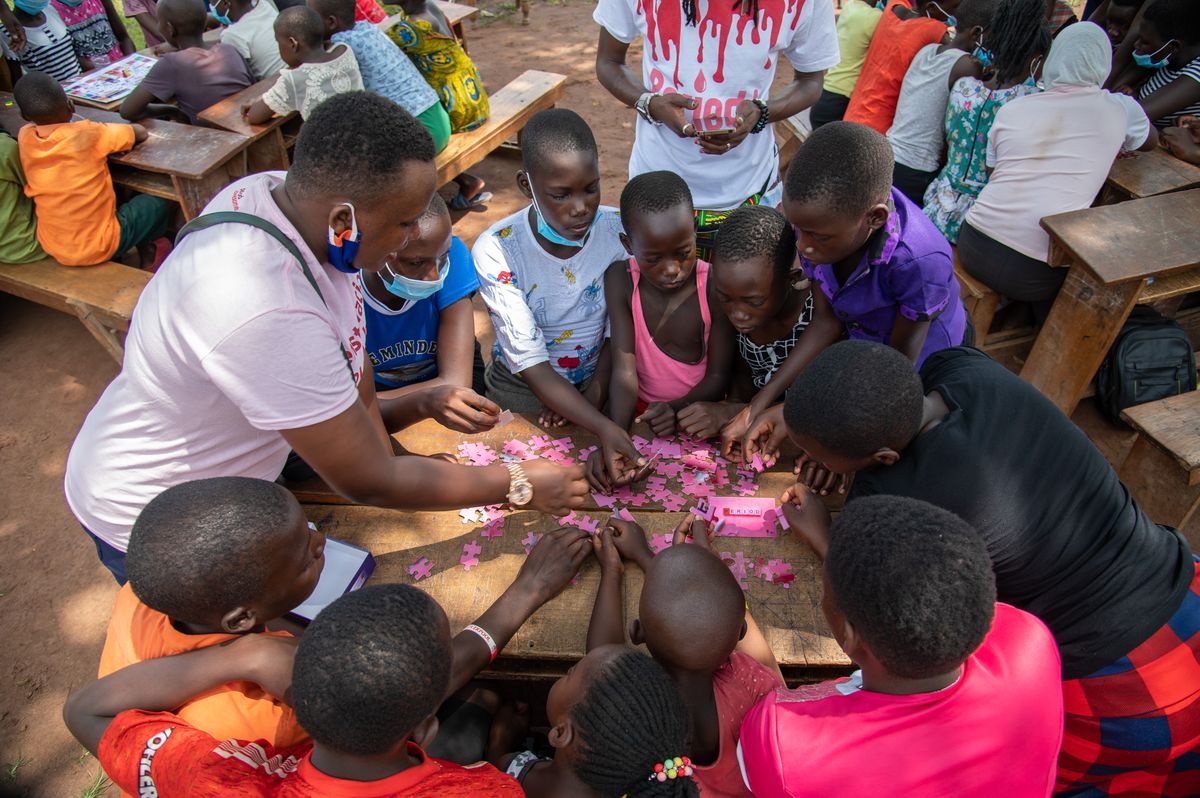
We worked with local artists, journalists, and civic leaders. We collaborated with neighbouring organisations across the city. We made the menstrual conversation danceable, performable, gameable: dance, song, recited poetry, a board game, puzzles, and the first-ever menstrual-themed fashion show — the prototype of what would later become Shebang Trashion.
"Shame is enforced through silence — and silence breaks under cultural noise."
The civic backbone of the project came from local leadership. Twenty-four parish-level leaders in Kisenyi III joined the work directly: Local Council 1 and 2 chairpersons, councilors from five zones, and seven leaders from five zones in Kamwokya. They were not advisors — they were mobilizers, campaigning alongside us, endorsing the rights-based approach, taking the conversation home. The work travelled north to Zaipi sub-county and stayed alive in monthly creative workshops in Kampala.
The aim was to grow #PeriodProud and #PeriodSupportive communities — to make it understood that period shame is a human-rights issue, not a private inconvenience. Two years in, the proof was unmistakable: by partnering with culture-makers and elected community leaders rather than bypassing them, BWEN had built a model the work could keep using.
"We arrived as the newcomers in the room. We left with the campaign that would carry our name across continents."
In 2019, BWEN joined the My Period Is Awesome platform — the regional network anchored by Wise Economy Global Association. The Cape Town workshop week was our first time at that table: Sonke Gender Justice running advocacy and governance sessions, Wise Economy leading method development, and grassroots organisations from across the region trading what worked and what didn't.
We were the new ones in the room. We didn't try to disguise it. We brought what we had: creative tools that had already begun to shift conversations in Kisenyi, and a willingness to learn from organisations that had been doing the work longer.
"We were the newcomers in the room. We didn't try to disguise it."
It was during that week that the seed of #NoPeriodShame took root. The first photographs of the campaign were taken in those Cape Town rooms — colleagues across borders raising the V-shaped hand sign before it had a campaign hashtag attached to it. The signal travelled home with us, gathered language from the work, and went global the following year.
The lesson was structural: regional partnership is not about getting bigger, it is about getting accurate. BWEN became more itself by sitting in rooms with Sonke and Wise Economy and the others — not less.
A decade of organizing, distilled into a wall of moments. Drop your photography into the slots — every image gets a frame.